
Product Development Lifecycle: A Complete Guide to the Stages, Process, and Best Practices
The product development lifecycle is a structured process that organizations follow to transform an idea into a market-ready product. It encompasses every stage of product creation, from identifying a market opportunity and conducting initial research to designing, developing, testing, launching, and improving the final product.
Whether a business is developing a consumer electronic device, a software application, an industrial component, or an innovative technology solution, understanding the product development lifecycle is essential for managing resources, reducing risks, and achieving commercial success.
A well-defined product development lifecycle enables companies to align engineering capabilities with customer requirements, evaluate technical feasibility, control development costs, and respond effectively to changing market conditions. It also provides a systematic framework for collaboration between research and development (R&D), engineering, marketing, manufacturing, and business teams.
This article explores the key stages of the product development lifecycle, the importance of each stage, common challenges, and best practices for building successful products.
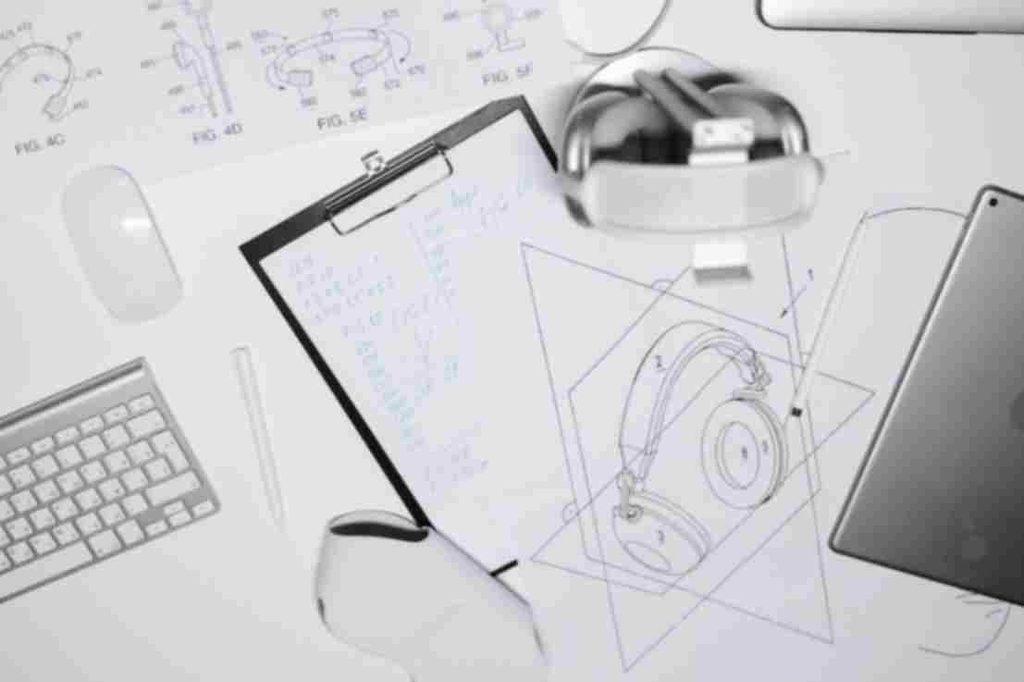
What Is the Product Development Lifecycle?
The product development lifecycle refers to the sequence of activities involved in creating, introducing, managing, and eventually retiring a product. It provides a roadmap that guides organizations through the technical, commercial, and operational aspects of product development.
Although the specific stages may vary depending on the industry, product complexity, and business objectives, the lifecycle generally includes:
- Idea generation and opportunity identification
- Market research and customer needs analysis
- Concept development and feasibility assessment
- Product design and engineering
- Prototyping and testing
- Product validation and refinement
- Manufacturing preparation and production
- Product launch and commercialization
- Post-launch monitoring and continuous improvement
- Product maturity and end-of-life management
These stages are interconnected rather than strictly linear. Feedback from testing, customer interactions, or market research may require organizations to revisit earlier decisions and modify product specifications.
The product development lifecycle should therefore be viewed as an iterative process that balances innovation, technical performance, cost, and customer satisfaction.
1. Idea Generation and Opportunity Identification
The first stage of the product development lifecycle involves identifying potential product ideas and opportunities that address customer problems or emerging market needs.
Ideas can originate from several sources, including:
- Customer feedback and unmet requirements (incase you have reviews of products already available in the market)
- Technological advancements and white space analysis
- Competitor product analysis
- Internal research and development
- Industry trends and regulatory changes
- Market gaps and underserved customer segments
- Improvements to existing products
For example, advancements in sensor technology may create opportunities for developing compact wearable health monitoring devices. Similarly, increasing demand for energy efficiency may encourage companies to develop intelligent power management systems.
At this stage, organizations should encourage creative thinking while maintaining a clear connection between proposed ideas and business objectives.
Key activities:
- Brainstorming and innovation workshops
- Identification of customer pain points
- Preliminary competitor analysis
- Technology trend monitoring
- Initial screening of product concepts
The objective is to generate a diverse pool of ideas that can be evaluated in subsequent stages.
2. Market Research and Customer Identification
An innovative idea does not automatically translate into a commercially viable product. Before committing significant resources, organizations must determine whether a genuine market opportunity exists.
Market research helps businesses understand customer expectations, purchasing behavior, competitive offerings, industry trends, and potential demand.
This stage is particularly important because developing a product without sufficient market validation can result in costly failures, even when the underlying technology performs well.
Key areas of market research
Customer analysis: Identify target customers, their needs, preferences, problems, and willingness to pay.
Competitor analysis: Evaluate competing products, pricing strategies, technical specifications, strengths, and limitations.
Market sizing: Estimate the potential market using metrics such as Total Addressable Market (TAM), Serviceable Addressable Market (SAM), and Serviceable Obtainable Market (SOM).
Trend analysis: Examine technological developments, consumer preferences, regulatory changes, and emerging opportunities.
Demand forecasting: Estimate potential sales based on market conditions, customer adoption, and competitive positioning.
The outcome of this stage should be a clearly defined target market, validated customer requirements, and an initial assessment of commercial potential.
3. Concept Development and Feasibility Assessment
Once a market opportunity has been identified, the next step is to convert the initial idea into a well-defined product concept.
Concept development establishes what the product will do, who it will serve, and how it will differentiate itself from existing solutions.
At this stage, organizations begin translating customer needs into measurable product requirements.
For example, the concept for a wearable health monitoring device may include requirements for compact dimensions, low power consumption, wireless connectivity, sensor accuracy, user comfort, and reliable data transmission.
Technical feasibility
Technical feasibility evaluates whether the proposed product can be developed using available technologies, materials, components, and engineering capabilities.
It may involve:
- Preliminary engineering calculations
- Technology readiness assessment
- Component selection
- Initial system architecture
- Identification of technical constraints
- Evaluation of manufacturing complexity
Commercial feasibility
Commercial feasibility examines whether the product can generate sufficient economic value to justify the investment.
Important considerations include development costs, production expenses, expected selling price, market demand, revenue potential, and return on investment.
Intellectual property assessment
An early intellectual property (IP) assessment can help identify existing patents, potential infringement risks, patentable innovations, and opportunities for differentiation.
Patent searches, freedom-to-operate assessments, and preliminary patentability evaluations can support informed product development decisions.
Deliverable: A product concept document containing functional requirements, preliminary specifications, feasibility findings, estimated costs, and development objectives.
4. Product Design and Engineering
Product design and engineering transform the approved concept into a detailed technical solution. This stage is often one of the most resource-intensive parts of the product development lifecycle because it involves translating requirements into practical designs.
The specific activities depend on the type of product being developed.
Mechanical design
Mechanical engineering focuses on the physical structure, dimensions, materials, ergonomics, durability, and manufacturability of the product.
Computer-aided design (CAD) tools are commonly used to create three-dimensional models, evaluate component fit, and optimize product geometry.
Electrical and electronics design
For electronic products, this stage includes circuit design, component selection, PCB layout, power management, signal integrity, and system integration.
Engineers may use simulation tools to evaluate circuit behavior and identify potential design problems before manufacturing.
Software and firmware development
Software and firmware engineers develop the control logic, embedded systems, user interfaces, communication protocols, and other digital functionalities required by the product.
Design for Manufacturing and Assembly (DFMA)
Design for Manufacturing and Assembly focuses on simplifying production, reducing component count, minimizing assembly complexity, and improving manufacturing efficiency.
Other important engineering considerations include:
- Design for Reliability (DFR)
- Design for Testability (DFT)
- Design for Environment (DFE)
- Design for Maintainability (DFM)
Integrating these principles during the design stage can reduce production costs, improve quality, and minimize the need for expensive redesigns.
5. Prototyping and Initial Testing
Prototyping is the process of creating preliminary versions of a product to evaluate its functionality, design, and technical performance.
A prototype allows engineers to identify problems that may not be apparent through theoretical analysis or computer simulations alone.
Depending on the product, prototypes may include 3D-printed mechanical parts, breadboard circuits, PCB prototypes, software demonstrations, or integrated hardware systems.
Types of prototypes
Proof-of-concept prototype: Demonstrates whether a fundamental idea or technology can work.
Functional prototype: Tests the primary functions and technical performance of the product.
Engineering prototype: Evaluates the design under conditions closer to the intended operating environment.
Appearance prototype: Focuses on dimensions, aesthetics, ergonomics, and user interaction.
Pre-production prototype: Represents a near-final design and is used to evaluate manufacturing processes and product readiness.
Testing during this stage may include functionality testing, electrical measurements, thermal analysis, mechanical stress testing, and preliminary reliability assessments.
The objective is to identify design weaknesses early, when modifications are generally less expensive and easier to implement.
6. Product Validation and Design Refinement
While initial testing establishes whether a prototype functions as intended, product validation determines whether the product meets its defined requirements and is suitable for its intended application.
This stage involves more systematic testing under representative operating conditions.
Depending on the product category, validation may include:
- Performance and accuracy testing
- Environmental testing
- Durability and reliability testing
- Safety and compliance testing
- Usability evaluation
- Software verification and validation
- Customer acceptance testing
For example, an electronic device intended for industrial use may require testing for temperature tolerance, electromagnetic compatibility, vibration resistance, and long-term operational reliability.
Customer feedback is also valuable during validation. User trials and beta testing can reveal usability issues, missing features, or performance limitations that may not be detected by engineering teams.
If validation identifies shortcomings, the product returns to the design or prototyping stage for refinement.
This iterative cycle continues until the product satisfies its technical specifications, customer requirements, and applicable regulatory standards.
7. Manufacturing Preparation and Production Planning
Once the product design has been validated, the organization prepares for commercial manufacturing.
This transition requires close coordination between engineering, procurement, quality assurance, manufacturing, and supply chain teams.
The objective is to establish a repeatable production process that delivers consistent product quality at an economically viable cost.
Key activities
Supplier selection: Identify reliable suppliers for raw materials, electronic components, mechanical parts, and other production inputs.
Bill of Materials (BOM): Prepare a detailed list of all components, materials, quantities, and specifications required to manufacture the product.
Production process development: Define assembly procedures, manufacturing workflows, equipment requirements, and production capacity.
Quality control planning: Establish inspection procedures, acceptance criteria, and quality assurance checkpoints.
Pilot production: Manufacture a limited batch to evaluate production processes, identify assembly issues, and verify product consistency.
Regulatory compliance: Confirm that the product meets applicable industry standards, safety requirements, and certification obligations.
Pilot production is particularly important because a design that works successfully in a laboratory may encounter challenges when manufactured at scale.
The transition from prototype to mass production should therefore be treated as a critical engineering and operational milestone.
8. Product Launch and Commercialization
Product launch marks the transition from development to market introduction.
At this stage, the organization brings together its technical, commercial, and operational preparations to make the product available to customers.
A successful product launch requires more than completing the engineering design. It also depends on pricing, distribution, marketing, customer support, and supply chain readiness.
Essential launch activities
- Finalize product positioning and value proposition.
- Establish pricing and distribution strategies.
- Prepare marketing materials and product documentation.
- Coordinate inventory and production schedules.
- Train sales and customer support teams.
- Establish warranty and after-sales service processes.
- Monitor early customer feedback and product performance.
The launch strategy should reflect the target market and product complexity. Some products may benefit from a limited market introduction, while others may require a coordinated commercial launch across multiple regions.
The objective is to ensure that the product reaches its intended customers with the necessary operational and support infrastructure in place.
9. Post-Launch Monitoring and Continuous Improvement
The product development lifecycle does not end when a product enters the market. Post-launch monitoring provides valuable information about real-world product performance, customer satisfaction, and commercial outcomes.
Organizations should establish measurable performance indicators to evaluate whether the product is achieving its intended objectives.
Important product performance metrics
- Sales volume and revenue
- Customer acquisition and retention
- Customer satisfaction
- Product return and failure rates
- Warranty claims
- Manufacturing defects
- Customer support requests
- Market share
- Product profitability
Customer feedback, field performance data, and service records can reveal opportunities for product improvements.
For example, repeated customer complaints about battery life may indicate the need for firmware optimization, improved power management, or hardware modifications.
Continuous improvement may involve software updates, component substitutions, design enhancements, cost optimization, or the introduction of new product features.
A structured feedback loop ensures that insights from the market inform future product development decisions.
10. Product Maturity and End-of-Life Management
Every product eventually reaches a stage where growth slows, market demand changes, or newer technologies make the existing solution less competitive.
At this point, organizations must decide whether to continue supporting the product, introduce an upgraded version, reposition it, or discontinue it.
End-of-life management involves several important considerations:
- Customer communication and transition planning
- Spare parts availability
- Warranty and service obligations
- Inventory management
- Supplier coordination
- Regulatory and environmental compliance
- Recycling and responsible disposal
For electronic products, end-of-life planning is particularly important because of component obsolescence, electronic waste regulations, and the need for responsible material recovery.
Lessons learned from discontinued products can also provide valuable insights for future innovation and product development initiatives.
Key Challenges in the Product Development Lifecycle
Despite having a structured process, organizations often encounter challenges that affect development timelines, budgets, and product outcomes.
| Challenge | Impact | Potential solution |
|---|---|---|
| Unclear customer requirements | Product may fail to address actual market needs | Conduct detailed customer and market research |
| Technical uncertainty | Development delays and redesigns | Perform feasibility studies and early prototyping |
| Cost overruns | Reduced profitability | Establish budgets and monitor development costs |
| Poor cross-functional coordination | Communication gaps and inconsistent decisions | Define responsibilities and establish regular reviews |
| Supply chain disruptions | Production delays and component shortages | Qualify alternative suppliers and plan procurement early |
| Inadequate testing | Product failures after launch | Implement structured verification and validation |
| Regulatory non-compliance | Delayed market entry or restricted sales | Integrate compliance requirements into early design |
| Weak post-launch monitoring | Missed improvement opportunities | Track performance metrics and customer feedback |
Addressing these challenges proactively helps organizations maintain control over the product development process and improve the likelihood of achieving their objectives.
Best Practices for an Effective Product Development Lifecycle
Organizations can improve development efficiency and product outcomes by adopting a combination of technical, commercial, and managerial best practices.
1. Adopt a customer-centric approach: Use customer research to guide product specifications and prioritize features that address genuine needs.
2. Validate ideas before making major investments: Conduct market research, feasibility assessments, and proof-of-concept testing before committing substantial resources.
3. Encourage cross-functional collaboration: Involve engineering, marketing, manufacturing, procurement, and quality teams throughout the lifecycle.
4. Use iterative development methods: Apply prototyping, testing, and feedback loops to identify and resolve problems early.
5. Integrate quality and compliance from the beginning: Consider safety, reliability, regulatory requirements, and manufacturability during initial design decisions.
6. Protect intellectual property: Evaluate patentability, freedom to operate, and other IP considerations as part of product planning and development.
7. Establish measurable milestones: Define clear deliverables, review points, budgets, and performance indicators for every stage.
8. Leverage digital engineering tools: Use CAD, simulation, product lifecycle management (PLM), and project management software to improve coordination and traceability.
9. Plan for scalability: Consider production capacity, supplier availability, cost structures, and service requirements before commercial launch.
10. Treat product development as a continuous process: Use market feedback and performance data to guide product upgrades and future innovation.
Frequently Asked Questions (FAQs)
1. What is the product development lifecycle?
The product development lifecycle is a structured process that organizations follow to transform an idea into a market-ready product. It includes stages such as idea generation, market research, feasibility assessment, design, prototyping, testing, manufacturing, product launch, and continuous improvement.
2. What are the main stages of the product development lifecycle?
The main stages of the product development lifecycle are:
- Idea generation and opportunity identification
- Market research and customer identification
- Concept development and feasibility assessment
- Product design and engineering
- Prototyping and initial testing
- Product validation and design refinement
- Manufacturing preparation and production planning
- Product launch and commercialization
- Post-launch monitoring and continuous improvement
- Product maturity and end-of-life management
These stages may vary depending on the product, industry, and organizational requirements.
3. Why is the product development lifecycle important?
The product development lifecycle helps organizations reduce development risks, control costs, improve product quality, and ensure that products meet customer expectations. It also facilitates collaboration between engineering, marketing, manufacturing, and business teams, resulting in more efficient development and better-informed decisions.
4. What is the difference between the product development lifecycle and the product life cycle?
The product development lifecycle focuses on the process of creating a product, from initial idea generation through development, testing, and market introduction. In contrast, the product life cycle describes how a product performs in the market over time, typically progressing through introduction, growth, maturity, and decline.
While the two concepts are related, the product development lifecycle emphasizes creation and commercialization, whereas the product life cycle focuses on market performance and demand.
5. How can companies reduce risks during the product development lifecycle?
Companies can reduce risks by conducting thorough market research, evaluating technical and commercial feasibility, developing prototypes, performing systematic testing, and validating customer requirements before large-scale production. Early identification of intellectual property concerns, regulatory requirements, and supply chain limitations can also prevent costly delays and redesigns.
6. What tools are used in the product development lifecycle?
Organizations use various tools depending on their industry and development requirements. Common tools include:
- CAD software: For mechanical design and 3D modeling.
- PCB design tools: For electronic circuit design and board layout.
- Simulation software: For evaluating product performance before physical prototyping.
- Project management tools: For tracking development timelines, tasks, and resources.
- Product Lifecycle Management (PLM) software: For managing product data, design revisions, and collaboration.
- Market research tools: For analyzing customer needs, competitors, and market opportunities.
These tools help improve accuracy, streamline workflows, and support better coordination throughout the product development lifecycle.
Conclusion
The product development lifecycle provides a systematic framework for transforming ideas into commercially viable products. By integrating market research, technical feasibility, engineering design, prototyping, validation, manufacturing, and post-launch improvement, organizations can make better-informed decisions throughout the development process.
However, successful product development requires more than following a predefined sequence of stages. It demands continuous collaboration, effective risk management, customer-focused innovation, and the ability to adapt to changing technological and market conditions.
For businesses developing products in competitive and rapidly evolving industries, a well-managed product development lifecycle can support innovation, improve resource utilization, reduce development risks, and create a foundation for sustainable growth.
Ultimately, the goal is not simply to develop a product that works, but to create a solution that meets customer needs, can be manufactured reliably, delivers commercial value, and remains relevant throughout its market life.
Ready to Turn Your Idea into a Market Ready Product??
We provide end to end research services.Get in touch to turn your idea into a market ready product.
Learn More